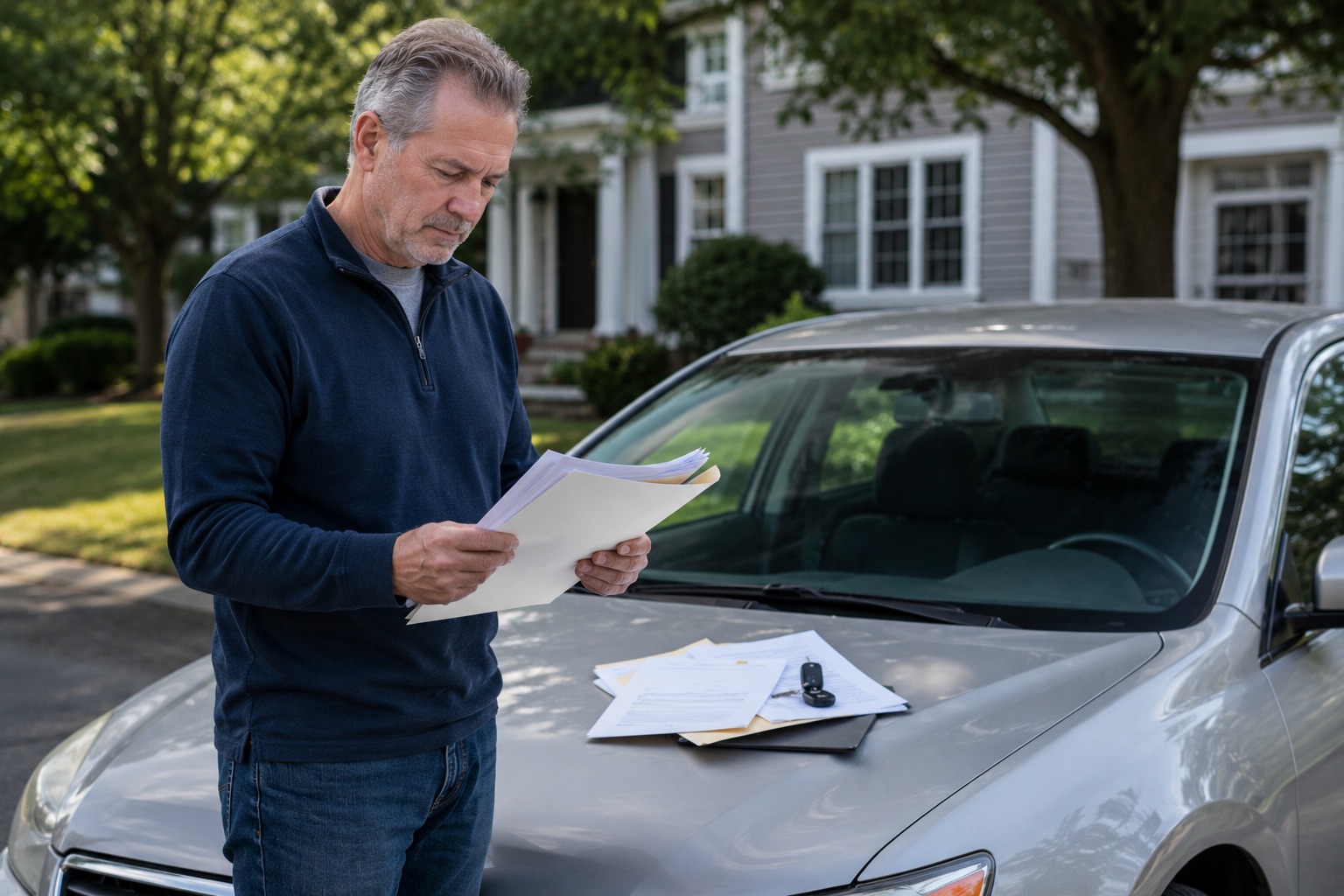
Start by Checking How the Vehicle Is Titled
Inheriting a vehicle creates a different paperwork problem from buying one. There may be no seller available to sign the title, the registered owner has died, and the person receiving the car may not yet have legal authority to transfer it. Whether the process is simple or requires estate documents depends on how the vehicle was titled and how the owner's estate is being handled.
Before filling out forms, find the certificate of title and look for the registered owner's name, co-owners, any transfer-on-death designation, and lienholder information. Do not assume that being named in a will automatically gives you authority to sign the deceased owner's title immediately.
The title may point toward one of several situations:
- Transfer-on-death beneficiary. A beneficiary was designated before death.
- Joint ownership. Another person is already listed as an owner.
- Sole ownership with probate. The vehicle becomes part of an estate administered through court proceedings.
- Sole ownership without formal probate. State law may provide a simplified procedure.
- Vehicle with an active lien. A lender still has a legal interest in the car.
Scenario 1: The Title Names a Transfer-on-Death Beneficiary
Some states allow vehicle owners to designate a beneficiary who can receive the vehicle after death. A valid TOD designation may let the vehicle pass without the normal probate route, but ownership still must be updated through the motor vehicle agency. The beneficiary may need the existing title, proof of death, a beneficiary statement or affidavit, a title application, and applicable fees.
Scenario 2: There Is a Surviving Co-Owner
Joint ownership can make the transfer simpler, but the exact wording on the title matters. States may distinguish among owners connected by “and,” “or,” “and/or,” or an explicit right-of-survivorship designation. Those distinctions can determine who has authority after one owner dies.
If another owner is listed on the title:
- Read the ownership wording exactly. Do not treat every two-name title as identical.
- Check the state's survivorship rules. Determine whether the interest passes directly to the survivor.
- Obtain required death documentation. A certified death certificate may be needed.
- Determine who must sign. Estate authority may still be necessary.
- Apply for an updated title. The vehicle record should reflect current ownership.
Scenario 3: The Vehicle Is Part of a Probate Estate
If the deceased owner held the vehicle individually and the estate is being probated, authority generally comes through the estate. A will can identify the intended beneficiary, but the court-appointed personal representative may need to handle the transfer. Depending on the jurisdiction, that person may be called an executor, administrator, or personal representative.
DMV paperwork may require Letters Testamentary, Letters of Administration, or other court-issued documents proving authority. Do not sign the deceased owner's name unless the applicable procedure specifically explains how the authorized representative should endorse the title.
Scenario 4: The Estate Qualifies for Transfer Without Probate
Not every inherited vehicle requires a full probate case. States may offer simplified procedures for qualifying estates, often using an affidavit instead of formal probate documents. Requirements can include a waiting period, estate-value limits, heir certifications, or confirmation that no probate proceeding is pending. Look specifically for a DMV procedure labeled deceased owner, inheritance, small estate, or transfer without probate.
Documents Commonly Needed for an Inherited Vehicle
The exact package depends on the state and inheritance path, but gathering the basic records early can prevent a stalled transfer.
You may need some combination of:
- original certificate of title;
- certified death certificate;
- application for a new title;
- Letters Testamentary or Letters of Administration;
- small-estate or transfer-without-probate affidavit;
- TOD beneficiary documentation;
- court or estate documents;
- lien release;
- odometer disclosure when applicable;
- proof of insurance and identification;
- registration documents and applicable fees.
Do not submit every document automatically. Identify the inheritance procedure first and follow that checklist.
What If the Original Title Is Missing?
A lost title can complicate inheritance because the person who normally would request a replacement is deceased. States have procedures for deceased owners or estates, and the person authorized to request a duplicate may be a surviving owner, executor, administrator, beneficiary, or qualifying heir. Do not recreate or alter the ownership document yourself.
Check for a Lien Before Transferring the Car
Inheritance does not automatically erase a vehicle lien. If a lender is listed, determine whether the debt was paid but the lien was never released or whether money is still owed. The estate may pay the balance, the beneficiary may have financing options, or the vehicle may need to be sold. Ownership of the car and responsibility for the debt are related but not interchangeable. Our lien release guide explains the title side of this process.
Do You Need an Odometer Disclosure?
Mileage disclosure can still matter when ownership changes through inheritance. Whether it is required depends on the vehicle, age, transfer procedure, and applicable rules. Follow the instructions for the specific inheritance transfer and report the actual odometer reading when required.
Insurance Should Be Addressed Before Regular Use
Receiving a vehicle through inheritance does not automatically place it on the heir's existing policy. Contact the insurer before regular driving and explain that ownership is being transferred from a deceased owner or estate. Avoid cancelling existing coverage until you understand the registration and estate consequences.
What Happens to the Registration and License Plates?
Title, registration, and plates are related but separate. Existing registration and plates do not necessarily transfer automatically to an heir, and specialty or disability plates can have additional restrictions.
Before driving the inherited vehicle, determine:
- whether current registration remains valid during estate administration;
- whether existing plates can stay on the vehicle;
- whether the heir needs new plates;
- whether inspection or emissions requirements apply;
- whether proof of insurance is required before registration;
- when the new owner must complete registration.
Do You Owe Sales Tax on an Inherited Vehicle?
Inheritance is different from purchasing a used car, but state tax treatment still varies. Many inheritance transfers receive exemptions from taxes that normally apply to purchases, while title, registration, plate, or transfer fees may still be due. Identify the transaction accurately as an inheritance rather than inventing a purchase price.
What If You Want to Sell the Inherited Car?
You may not want to keep the vehicle. Whether it can be sold directly depends on legal authority and state title procedure. An executor or administrator may be able to sell it for the estate, while a TOD beneficiary or heir may need to establish ownership first. Do not assume possession of the keys or a copy of the will gives you authority to sell.
Can Several Heirs Inherit the Same Vehicle?
Yes. A will or intestacy law may give several people an interest in the estate even though only one physical vehicle exists. The personal representative may distribute the vehicle to one heir, sell it and distribute proceeds, or follow another authorized arrangement. If several people have legal rights to the estate, document the disposition rather than relying only on verbal agreement.
Common Mistakes With Inherited Vehicle Titles
Inheritance transfers often become difficult because someone starts filling out the title before determining who has authority to act.
Common mistakes include:
- signing the deceased owner's name without authority;
- assuming a will replaces the DMV process;
- ignoring the exact wording of joint ownership;
- overlooking a TOD beneficiary;
- using a small-estate affidavit without qualifying;
- failing to check for a lien;
- cancelling insurance too early;
- assuming plates automatically transfer;
- selling before establishing authority;
- missing deadlines or waiting periods.
Step-by-Step Inherited Vehicle Checklist
Although forms vary by state, most inherited-vehicle transfers can be approached in the same general order.
- Locate the original title. Check owners, lienholder, and TOD designation.
- Obtain certified death certificates.
- Determine how ownership passes. TOD, survivorship, probate, or non-probate procedure.
- Establish authority. Obtain court letters, affidavit, or other required documentation.
- Resolve any lien.
- Review the official DMV checklist.
- Complete the title correctly.
- Complete mileage or other disclosures when required.
- Arrange insurance.
- Apply for the new title and registration.
- Handle the plates correctly.
- Keep copies and confirmations.
When Should You Get Legal Help?
Many inherited vehicles can be transferred without an attorney, especially when a clear beneficiary or straightforward small-estate procedure applies. Legal help becomes more useful when ownership is disputed, several heirs claim the vehicle, probate is underway, estate documents conflict with the title, or significant debt is involved. The DMV determines what it needs to update the vehicle record; estate law determines who has authority over the property.
Conclusion
Transferring the title of an inherited vehicle begins with determining how ownership legally passes, not with signing the title. A TOD beneficiary, surviving co-owner, probate estate, and qualifying small estate can each follow different procedures. Once authority is clear, obtain the death certificate, address liens, complete the correct inheritance documents, arrange insurance, and submit the title and registration application. Check the official state requirements before making any marks on the title so you do not create unnecessary problems for the estate or the next owner.