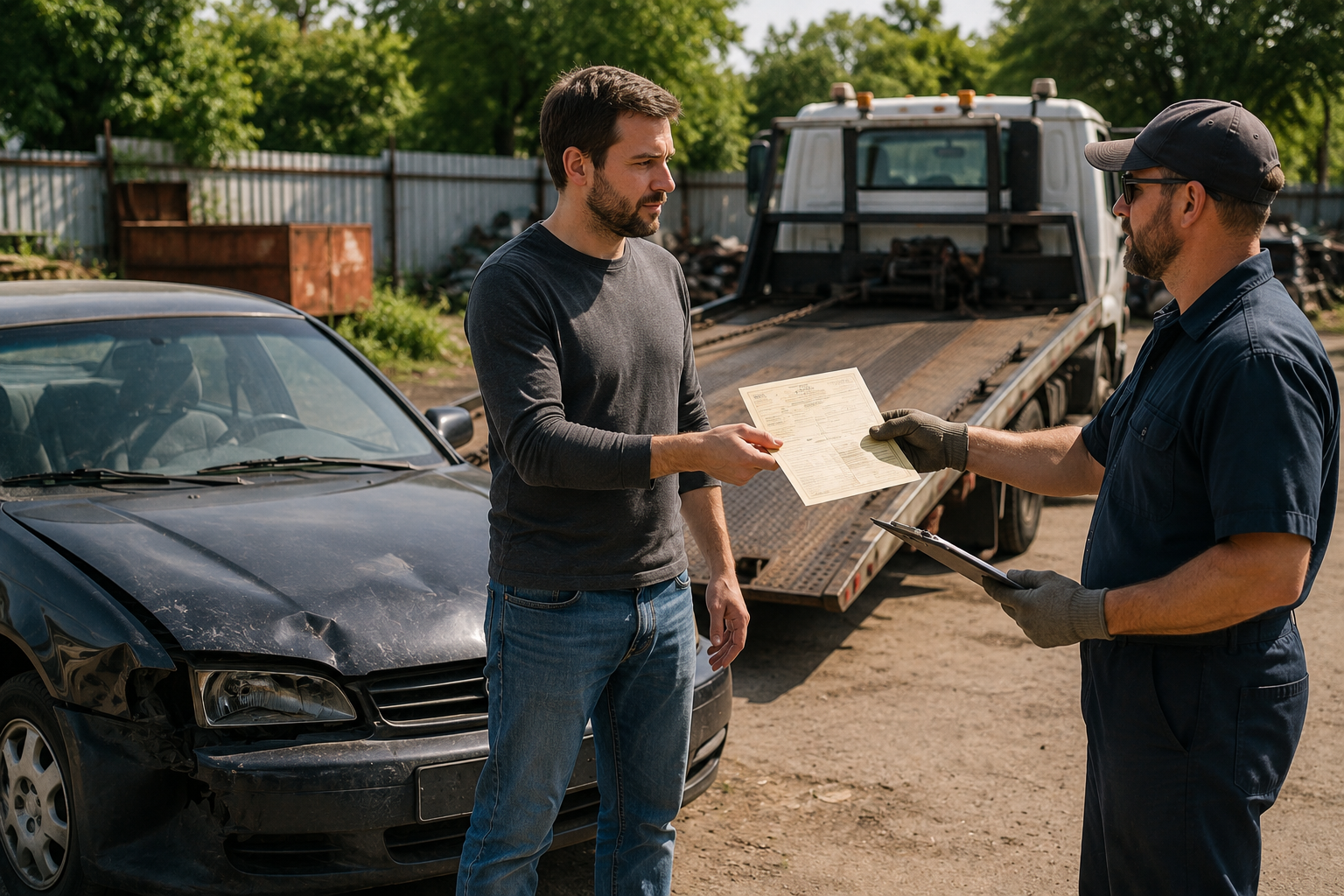
Why a Scrapyard Needs Proof of Ownership
Junking or scrapping a car isn't as simple as dropping it off — scrapyards and salvage buyers are legally required to verify who owns a vehicle before accepting it, precisely because unregulated scrap operations have historically been a channel for disposing of stolen vehicles. Every reputable yard reports the vehicles it processes to the state, and accepting a car without proof of ownership exposes the yard itself to liability, not just the seller. Law enforcement agencies routinely use these reporting records to trace stolen vehicles that show up at legitimate scrap operations, which is exactly why the documentation requirement is enforced as strictly as it is.
This means the paperwork requirement isn't a formality you can talk your way around at a cooperative yard — it's a legal condition of the transaction that protects both sides. Understanding what counts as acceptable proof, and what to do if you don't have the standard document, is the difference between a same-day scrap and a multi-week delay.
The Standard Document: Your Vehicle's Title
A clear, signed vehicle title is the gold-standard document for junking a car and what every scrapyard will ask for first. The title needs to be in your name, or signed over to you by the previous owner if you bought the car specifically to scrap it. If a lender's name still appears on the title as a lienholder, that lien generally needs to be released before a scrapyard will accept the vehicle, the same as it would for any other transfer.
You'll typically sign the back of the title in the seller or transferor section, exactly as your name appears on the front, and most yards will also ask for a government-issued photo ID to confirm your identity matches the name on the document. This isn't unique to junking — it mirrors the same identity verification used in a standard title transfer — but yards tend to enforce it more strictly given the fraud risk specific to scrap operations.
What to Do If You've Lost the Title
A missing title doesn't automatically mean a car can't be scrapped, but it does add steps and often limits which yards or buyers will take the vehicle. Losing a title is more common than most owners expect — it happens after a move, a divorce, an inherited vehicle where paperwork was never fully sorted out, or simply years of the document sitting forgotten in a drawer. What matters most is knowing which alternatives your specific state actually recognizes before you show up expecting to complete the transaction on the spot.
Depending on the state and the specific scrapyard's policies, alternatives can include:
- A current vehicle registration — accepted by some states and yards as sufficient proof, particularly for older vehicles that predate title requirements.
- A notarized bill of sale or ownership affidavit — used in several states as a substitute when the original title genuinely can't be located.
- A bonded title — a state-issued replacement title backed by a surety bond, used when ownership can't otherwise be proven; this option takes longer and typically involves a fee.
- A specialized junk car buyer — some buyers are set up specifically to handle titleless vehicles and manage the paperwork on your behalf, though payouts are often lower than at a standard scrapyard.
Policies here vary enormously by state and even by individual yard, so it's worth calling ahead before towing a titleless vehicle anywhere — showing up without confirming acceptable alternatives in advance is the most common reason a scrap attempt gets turned away.
If none of the standard alternatives apply to your situation — for instance, an inherited vehicle where the estate hasn't been formally settled, or a title that was never transferred correctly years earlier — most states have a specific process for establishing ownership in these edge cases, though it typically involves more paperwork and a longer timeline than a standard duplicate title request. Contacting your state's motor vehicle agency directly and explaining the specific situation is almost always faster than guessing at which general category your case falls into.
Step-by-Step: Junking a Car the Right Way
With the documentation question settled — whether that's a clean title or one of the accepted alternatives — the rest of the process is mostly a matter of sequence. Handling the steps in order avoids the two most common outcomes that turn a routine scrap into a wasted trip: showing up without something the yard requires, or leaving without something you needed to keep for your own records.
Follow this order from start to finish:
- Confirm you have a clear title or an accepted alternativeCheck your state's specific rules if the title is missing, lost, or still shows a lienholder.
- Call ahead to the scrapyard or junk buyerConfirm exactly which documents they require and whether they handle towing.
- Remove personal belongings and platesMost states require the license plates to be returned to the DMV or transferred to another vehicle, not left on a scrapped car.
- Sign over the title at the point of pickup or drop-offBring photo ID, and photograph the signed title before handing it over.
- Get a signed receipt or bill of sale from the buyerThis should list the VIN, date, and both parties' information.
- Notify your state's motor vehicle agencyReport the vehicle as junked or scrapped so it's removed from your record and you stop owing registration renewals or taxes on it.
The whole process typically takes less than an hour at the yard itself, with the DMV notification handled separately by mail or online in most states — it's a short process overall, but each step protects you from a different kind of paperwork problem down the line.
Why Notifying the DMV Afterward Actually Matters
Handing the car over to a scrapyard feels like the end of the process, but skipping the final step of notifying your state's motor vehicle agency can cause real problems later. Until the state's records show the vehicle as junked, you may still be considered its registered owner — which matters if the vehicle is later involved in an accident, gets a parking ticket, or if your state continues charging annual registration fees on a car you no longer possess.
Many states issue a specific "junk certificate" or "certificate of destruction" once the paperwork is filed, permanently marking the vehicle's record so it can never be re-titled or registered again. Keeping a copy of this certificate for several years afterward is good practice — some states specifically require the certificate be retained for a set period after destruction.
Common Mistakes That Cause Delays or Rejections
Most rejected or delayed junk car attempts trace back to the same handful of avoidable errors, and none of them require anything beyond a few extra minutes of preparation to prevent. Recognizing these patterns ahead of time is usually enough to sidestep them entirely, since almost all of them come down to skipping a confirmation step rather than any genuine complication with the vehicle itself.
Watch for these specific mistakes before they cost you a wasted trip:
- Showing up at a yard without confirming their specific documentation requirements in advance
- Signing the title incorrectly or with a name that doesn't match government ID
- Leaving license plates on the vehicle instead of returning them to the DMV first
- Assuming the scrapyard will notify the state on your behalf without confirming it
- Not resolving an active lien before attempting to junk a financed vehicle
Scrapyards vs. Junk Car Buyers vs. Salvage Auctions
Not every outlet for an end-of-life vehicle works the same way, and the documentation expectations shift depending on which one you use. A traditional scrapyard is generally the strictest about paperwork, since its business is built around processing metal for recycling and it faces direct regulatory scrutiny over where vehicles come from. These operations almost always require a clean title or an explicitly state-approved alternative before they'll take a car.
A specialized junk car buying service — the kind that advertises free towing and same-day cash — often has more flexibility built into its process specifically because handling titleless or complicated vehicles is part of its business model. These buyers typically know exactly which alternative documents your state accepts and can walk you through the paperwork over the phone before a tow truck ever shows up, though the tradeoff is usually a somewhat lower payout than a yard would offer for a title-clear vehicle in comparable condition.
Salvage auctions sit at a different point entirely, generally used for vehicles that still have resale value as parts or as a rebuild project rather than for cars being sent straight to the crusher. These require the most complete documentation of the three options, since the vehicle is being transferred to a new registered owner rather than permanently retired from the road. Many salvage auctions also require the vehicle to already carry a salvage title — a designation applied after an insurer declares a car a total loss — which is a separate document from a standard clean title and follows its own application process through the state.
What Happens to the Car After It's Junked
Once a vehicle is accepted for scrap, the yard typically drains any remaining fluids, removes the battery and any hazardous materials, and pulls parts with resale value before the shell itself is crushed or shredded for metal recycling. This process is why the VIN has to remain attached and legible throughout — regulations in most states require it to stay identifiable until the vehicle is fully destroyed, both for the yard's own compliance records and to prevent any dispute later about which specific vehicle was processed.
From the owner's side, none of this destruction process requires any further involvement once the title has been signed over and a receipt obtained — the responsibility that remains is entirely administrative: making sure your state's records reflect that the car is gone. Some states go a step further and require the scrapyard itself to physically stamp or notate the surrendered title with a "junked" designation before forwarding it to the motor vehicle agency, creating a paper trail that ties the destruction directly back to the original document rather than relying solely on a separate notification form.
The Bottom Line
Junking a car is one of the simpler vehicle paperwork events on paper, but it's also one of the easiest to get partially wrong by treating the tow truck's departure as the finish line. The documentation a scrapyard needs exists to prove you had the right to dispose of the vehicle in the first place, and the DMV notification afterward exists to make sure that disposal is reflected in the state's records so you're not still on the hook for a car that no longer exists. Handling both halves — the handoff and the paperwork that follows it — is what actually closes the loop, and skipping either one is how a routine scrap turns into an unexpected registration bill or a records mismatch months down the line.
Frequently Asked Questions
Can I junk a car without a title at all?
Often yes, depending on your state and the specific yard — a registration, notarized bill of sale, or bonded title can sometimes substitute, but acceptance varies enough that it's worth confirming with the yard before towing the vehicle.
Do I get money for a junked car even without a clean title?
Usually less than you would with a clear title. Yards that accept alternative documentation often pay lower rates to offset the added risk and paperwork on their end.
What happens to my license plates when I scrap a car?
Most states require plates to be removed and returned to the DMV, or transferred to a replacement vehicle — leaving them on a scrapped car is a common mistake that can create confusion in state records.
Do I still owe registration fees after junking a car if I don't notify the DMV?
Potentially, yes. Until the state's record shows the vehicle as junked or destroyed, you may still appear as the registered owner and remain liable for renewal fees or related notices.
Is a junked car's VIN reused or reassigned to another vehicle?
No. Once a vehicle's title is surrendered for junk, most states permanently flag that VIN in their system as destroyed, and it can never be re-titled or registered again, even if parts from the vehicle are reused elsewhere.
Should I cancel my insurance before or after junking the car?
After you've completed the handoff and have your receipt, not before — you want coverage in place in case anything happens during transport to the yard, and most insurers only need the sale or destruction date to process a cancellation or refund of unused premium.