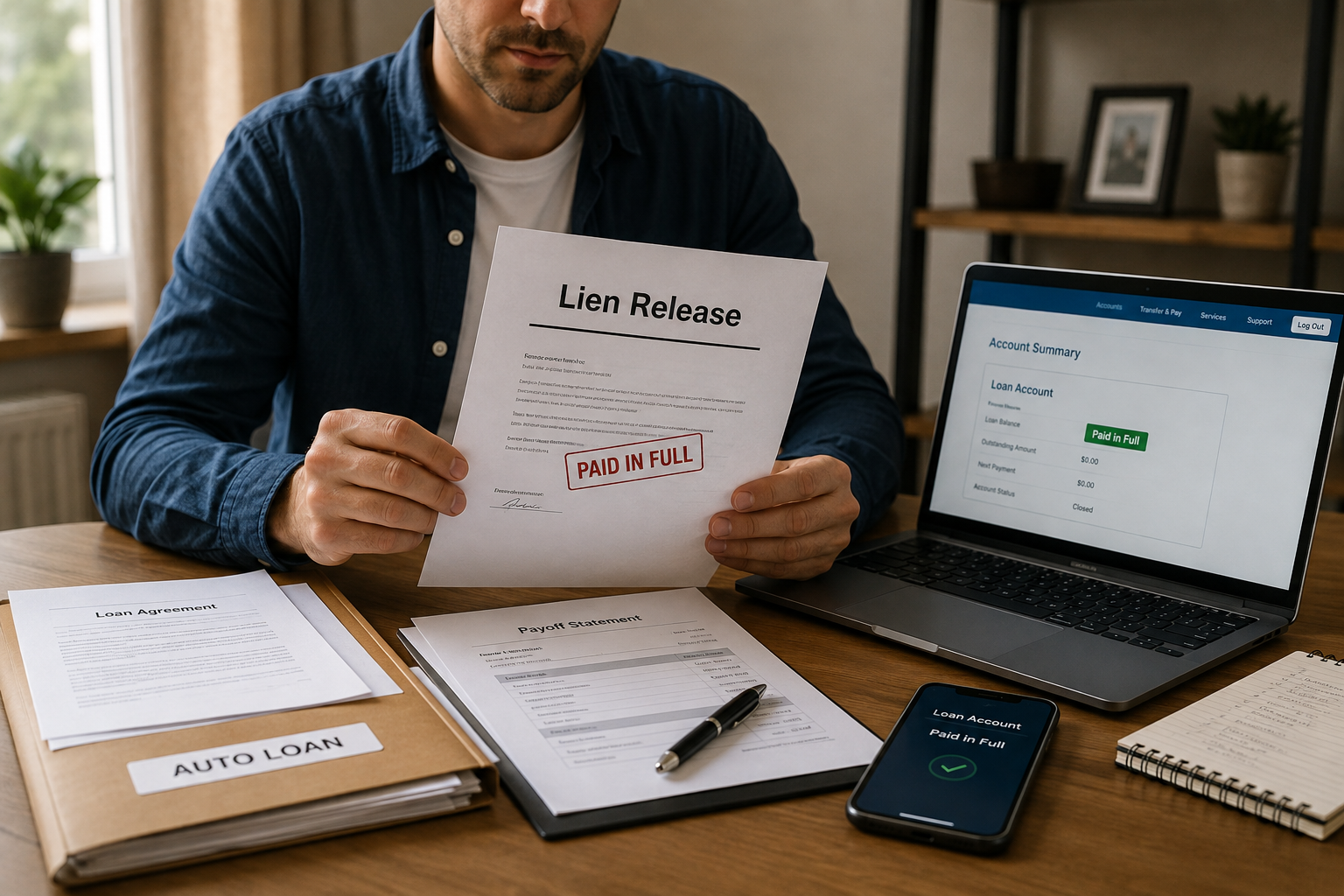
What a Lien Actually Means for the Title
When you finance a vehicle, the lender is listed on the title as a lienholder — a legal claim that gives them a stake in the car until the loan is fully paid off. In most states, that lien has to be formally released before the title can be transferred to a new owner, whether that's you taking full ownership after payoff or a buyer taking over the car in a private sale. Until the release happens, the title isn't "clean," and most motor vehicle agencies won't process a transfer against it.
The exact mechanics vary significantly by state. Some states use an Electronic Lien and Title (ELT) system where the lender notifies the DMV directly and the record updates automatically. Others still rely on a physical release document that has to be filed by mail or in person before the title is considered clear. Eight states let the owner physically hold the title even while a lien is active, which makes the paperwork simpler once the loan is paid; in the rest, the lender holds the title itself until payoff.
Lien Release After Paying Off Your Own Loan
If you've just made your final payment and want the title in your name free and clear, the process generally starts with the lender rather than you. Once the loan is paid, the lienholder is required to notify the state — either electronically through an ELT system or by mailing a release document — confirming the debt is satisfied and their claim on the title is over.
Depending on the state, this can take anywhere from a few days to six weeks or more to fully process. If your state doesn't handle it automatically, you may need to submit a title or registration application yourself once the lender's release has been recorded, along with any applicable fee. It's worth requesting written confirmation of the payoff and lien release directly from your lender, since DMV processing delays are common and having your own paper trail speeds up any follow-up call.
Selling or Transferring a Car That Still Has a Loan On It
Selling a financed vehicle before the loan is paid off is common, but it adds a coordination step that a lien-free sale doesn't require. The remaining loan balance has to be paid off — either by the seller before the sale, by the buyer as part of the purchase price, or through an escrow arrangement — before the lienholder will release their claim and allow the title to transfer.
In practice, that payoff usually happens through one of these paths:
- Seller pays off the loan first, then sells the car with a clean title — the simplest path for the buyer, but requires the seller to have the cash on hand.
- Buyer's payment covers the payoff, with funds sent directly to the lienholder rather than the seller, and the remaining balance (if any) going to the seller.
- A trade-in at a dealership, where the dealer handles the payoff directly and may roll any remaining balance into a new loan.
- An escrow service for private-party sales, which holds the buyer's funds and disburses them to the lienholder and seller according to the agreed terms — reducing risk for both sides.
Regardless of the route, get a written payoff quote from the lienholder before agreeing on a final sale price — this figure includes any accrued interest and is only valid through a specific date, so a stale quote can leave a gap between what's owed and what's collected at closing.
Step-by-Step: Clearing a Lien and Completing the Transfer
Once you understand which payoff route applies to your situation, the actual mechanics of clearing the lien and finishing the transfer follow a fairly consistent sequence regardless of whether you're the one who financed the car or you're buying it from someone else. Each step depends on the one before it, so skipping ahead — like submitting transfer paperwork before the release is confirmed — is usually what turns a routine process into a stalled one.
Work through these steps in order to avoid the most common holdups:
- Request a payoff quote from the lienholderAsk for the exact balance, accrued interest, and the date through which the quote is valid, plus instructions for where payment should be sent.
- Arrange payment through the appropriate channelDirect payoff, buyer funds, dealer trade-in, or an escrow service, depending on the sale structure.
- Confirm the lienholder has released the lienEither through the state's electronic system or a mailed release document — don't assume it's done just because the balance was paid.
- Complete the title transfer paperworkOnce the release is on record, the title transfer proceeds like any other sale — signed title, bill of sale, and buyer information.
- Submit to the motor vehicle agencyWithin your state's filing window, along with any transfer or registration fees.
- Keep copies of every documentThe payoff statement, lien release confirmation, and title transfer receipt, in case a processing error needs to be resolved later.
Following this order doesn't guarantee a same-day result, since state processing times vary widely, but it removes the most common self-inflicted delays — submitting paperwork out of sequence or assuming a step is complete before it's actually confirmed.
Common Problems That Delay a Lien Release
Even a straightforward payoff can run into friction once it hits the actual administrative process. Most delays trace back to one of a small number of recurring causes, and knowing which one applies to your situation makes it much easier to know who to call and what to ask for.
| Problem | Why It Happens |
|---|---|
| Lender hasn't reported payoff to the DMV | Some lenders batch-process ELT updates on a delay; a follow-up call is often needed |
| Payoff quote expired before payment cleared | Interest continues accruing daily; a quote is only valid through a specific date |
| Wrong lienholder listed after a loan refinance | The original lender may still show on record if the refinance lender didn't update it |
| Title lost by lender or DMV during processing | Requires a duplicate title application, adding weeks to the timeline |
| Release mailed to an outdated address | Common after a move; the DMV or lender may still have your previous mailing address on file |
| Second lien from a prior loan never cleared | Happens if an old loan was refinanced or paid off years earlier but the release was never filed |
Most of these resolve within a single phone call once identified correctly, but they rarely resolve on their own — someone has to notice the mismatch and push the paperwork through, and that's usually the vehicle owner rather than either the lender or the DMV.
Mistakes That Stall the Process Even Longer
Beyond the systemic issues covered in the table above, a fair share of lien release delays are simply self-inflicted — small missteps in how the payoff or transfer is handled that add days or weeks to a process that would otherwise move quickly. None of these require bad luck or an uncooperative lender to cause a problem; they're just easy to overlook when you're focused on closing a sale.
Watch for these specific mistakes before they cost you time:
- Agreeing on a sale price before getting a current, written payoff quote
- Assuming a lien is released the moment the balance hits zero, without confirming with the DMV
- Sending payoff funds directly to the seller instead of the lienholder in a private sale
- Not accounting for daily accrued interest between the quote date and the actual payment date
- Discarding payoff and release documentation once the deal appears to be done
When You've Refinanced the Loan
Refinancing adds an extra wrinkle that catches a surprising number of owners off guard. When a new lender pays off the old loan, the new lender becomes the lienholder of record — but that update doesn't always happen automatically or immediately on the title itself. If the original lender's electronic system reports the payoff but the new lender's lien filing lags behind, the title can show up with no lienholder at all for a period, or worse, with the wrong lienholder still listed.
This matters most if you try to sell or transfer the vehicle shortly after refinancing, since a mismatch between what your loan paperwork says and what the state's title record shows can stall the transfer entirely. If you've refinanced within the past few months, it's worth confirming directly with your state's motor vehicle agency that the lien record has been updated to reflect the new lender before you list the car for sale or attempt any transfer.
States Without Electronic Lien and Title Systems
Not every state has adopted an Electronic Lien and Title system, and in those that haven't, the entire process depends on paper documents moving between the lender, the owner, and the DMV. In these states, the lienholder typically mails a physical lien release form directly to the titled owner once the loan is paid off, and the owner is then responsible for submitting that release along with a title application to complete the process.
This paper-based path is where delays most often happen — a release letter sent to an old address, a lender that's slow to mail documents, or a form that gets lost between offices. If you're in a state without ELT and haven't received your release within a few weeks of your final payment, following up directly with the lender's title or payoff department is usually faster than waiting for it to resolve on its own.
The Bottom Line
A lien on a title isn't a red flag or a sign of trouble — it's simply how financed vehicle ownership is recorded until the loan is settled. What matters is understanding that the lien has to be actively released, not just paid off, before a title transfer can go through, and that the specific mechanics of that release depend heavily on your state and your lender. Getting a written payoff quote, confirming the release is actually on record rather than assuming it happened, and keeping documentation of every step are the three habits that keep a routine payoff or sale from turning into a weeks-long paperwork problem.
Private-Party Sales vs. Dealer Trade-Ins
The lien release process looks meaningfully different depending on whether the financed car is being sold to a private buyer or traded in at a dealership, and it's worth understanding which situation you're actually in before assuming the other guide applies. A dealer trade-in is generally the path of least friction: the dealership's finance department contacts your lienholder directly, confirms the exact payoff amount, and pays it off as part of the transaction — often within the same visit. You typically never touch the payoff funds directly, and the dealer absorbs the coordination work in exchange for handling the trade.
A private-party sale puts all of that coordination on the buyer and seller instead. Neither party has the institutional relationship with the lienholder that a dealership has, which means payoff quotes, payment routing, and confirmation of the release all have to be handled manually — usually by phone and mail rather than through an automated dealer system. This is exactly why escrow services exist for private used-car sales involving an active loan: they insert a neutral third party into the payment flow so neither the buyer nor the seller has to trust the other with a large sum of money before the lien is confirmed released.
Frequently Asked Questions
How long does a lien release take after payoff?
It varies by state and lender, but plan on anywhere from a few days with an automated electronic system to six weeks or more if paperwork has to be processed manually.
Can I sell a car before the lien is released?
You can agree to a sale, but the title transfer generally can't be completed until the lien is paid off and released, which is why payoff timing needs to be coordinated with the sale.
What if my lender won't respond about releasing the lien?
Contact your state's motor vehicle agency directly — many have a process for resolving stalled lien releases, and some states set legal deadlines lenders must meet to report a payoff.
Do I need a lawyer to handle a lien release?
Not for a standard payoff or straightforward sale — the process is administrative. A lawyer becomes worth considering only if there's a dispute over who's owed money or the lienholder is unresponsive for an extended period.
What's the difference between a lien release and a title transfer?
A lien release removes the lender's legal claim from the title, clearing it for transfer. The title transfer itself is the separate step of actually changing the registered owner's name — a lien has to be released first, but releasing it doesn't automatically transfer ownership to anyone else.
Can a lien release happen if I still owe a small balance?
No — a lienholder generally won't release a lien until the loan is paid in full, including any remaining interest or fees. Partial payoffs don't clear the lien; the account has to reach a zero balance according to the lender's records.